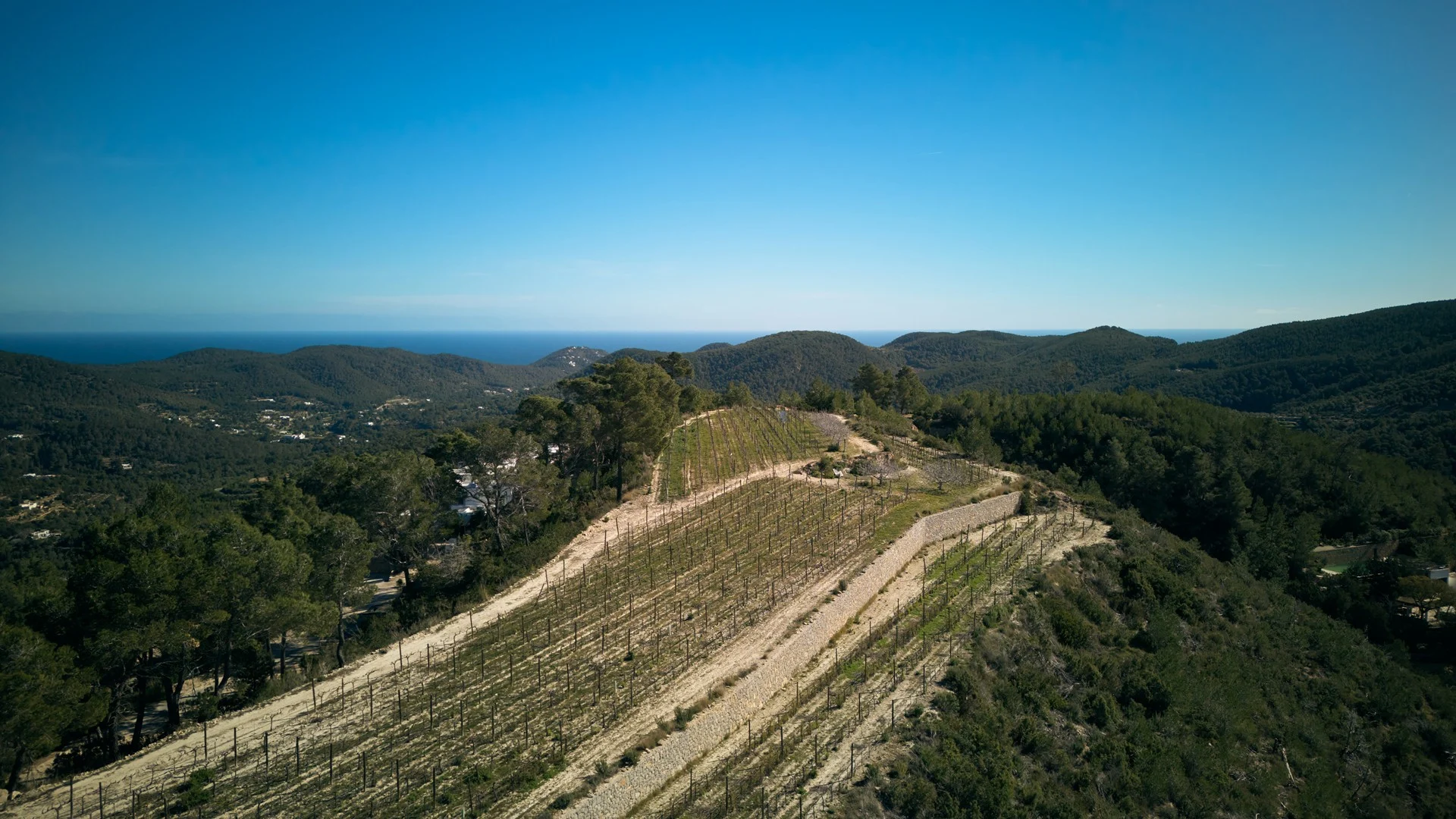
February 20, 2026. Time to discover some Ibiza wines. I leave Sant Joan de Labritja behind and wind my way up towards Sant Vicent de sa Cala. I turn down a path indicated by Peter Lehner, the man behind the creation of the Blacknose winery in Ibiza alongside his brother, Tino Lehner. Driving in second gear, I take in the rural landscape—the wild north. Mountainous borders, pine forests, Mediterranean maquis, dense undergrowth. Scattered houses, a few patches of farmland. The plains down there have deep alluvial soils. I turn where I believe Peter pointed, and the car begins to climb a private gravel and sand track. I arrived at the property.
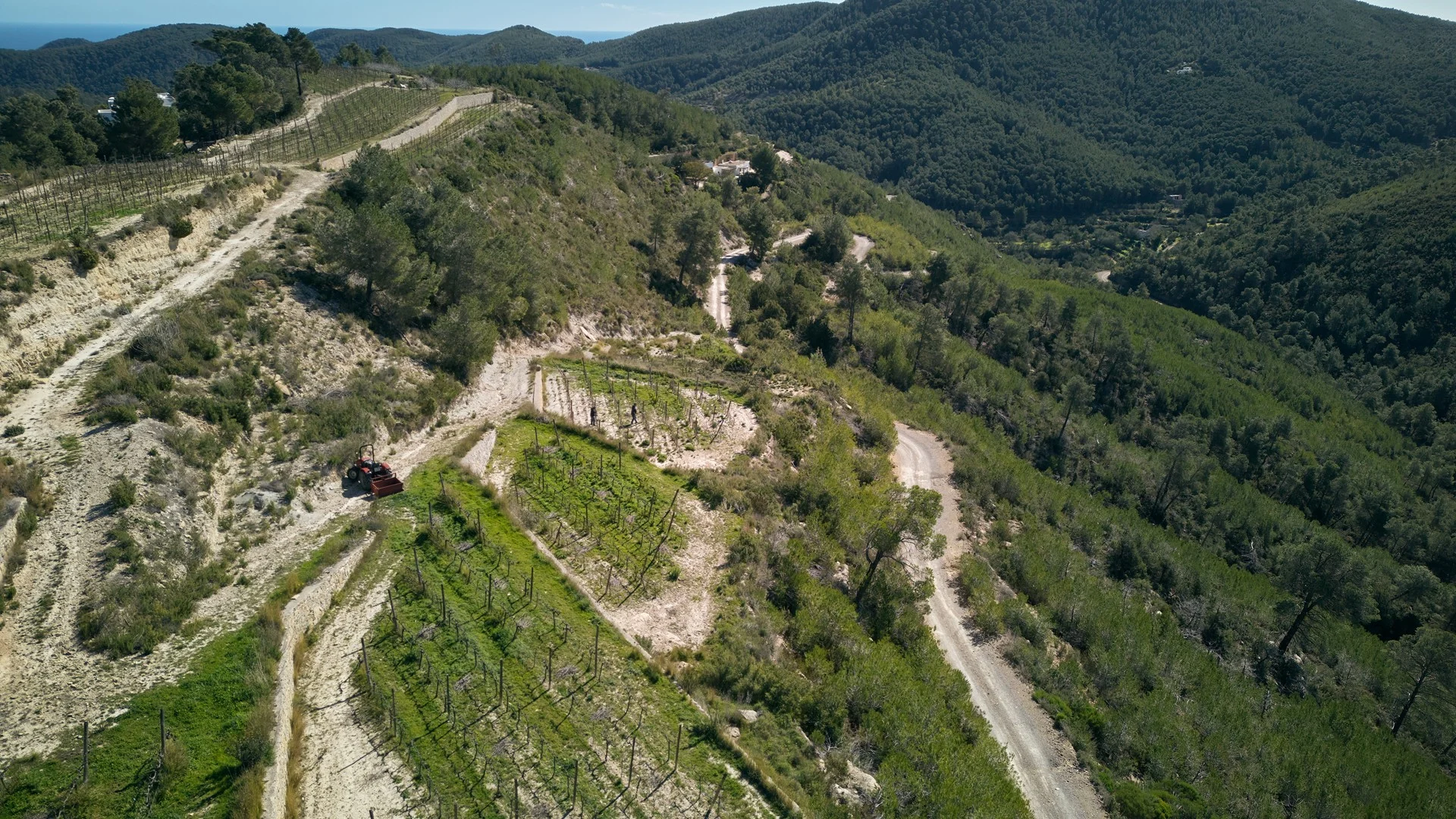
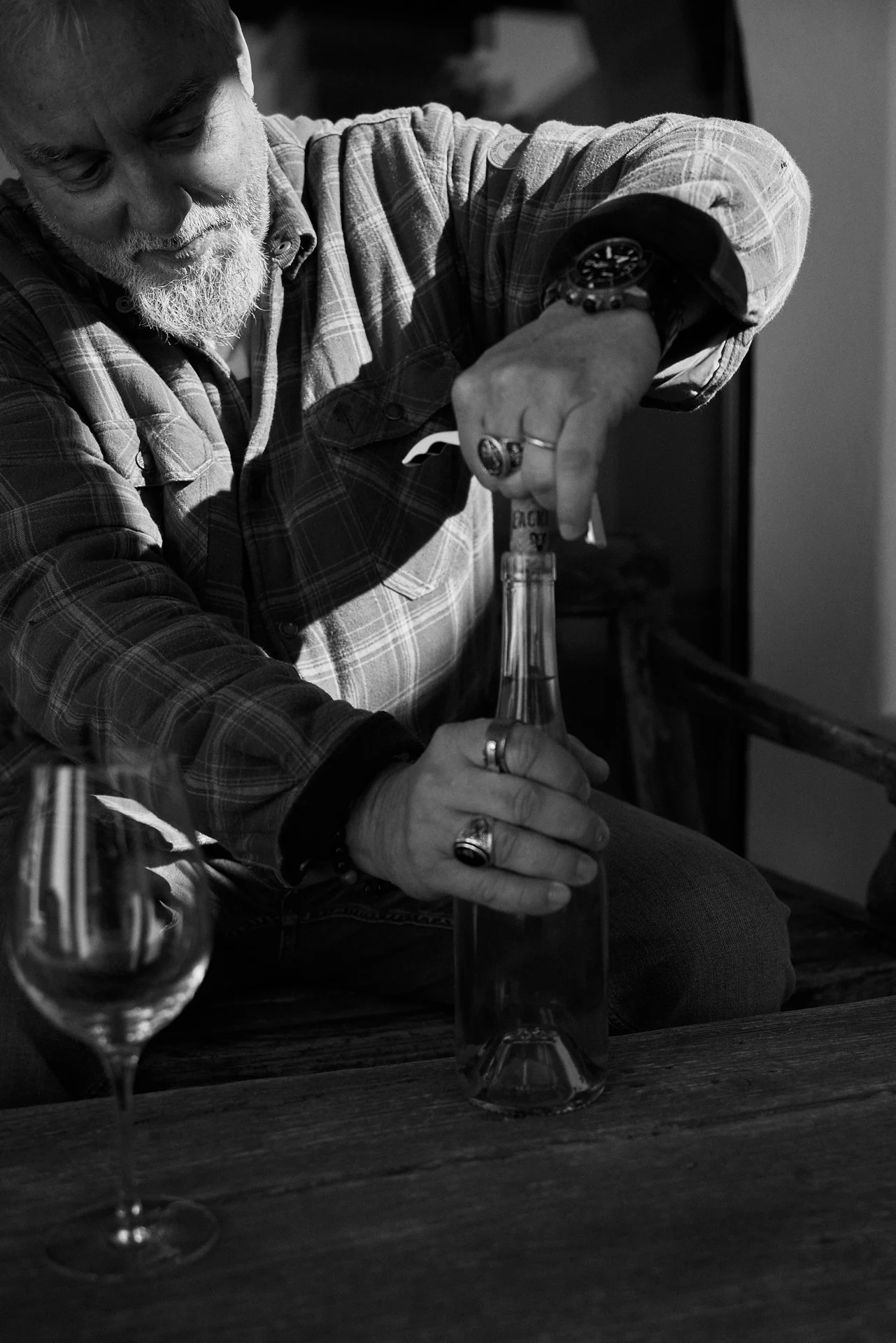
I honk the horn, and Peter Lehner greets me with great serenity. We introduce ourselves briefly and exchange a few remarks. He is a warm guy who radiates calm. He is highly intrigued by the fact that I’m a wine and journalism geek visiting purely for pleasure. I share my interests and my recent foray into the wine world while pulling out my camera and mounting the 24-105mm f2.8 «bazooka» glass—I don’t want to mess around with focal lengths. I want to walk, observe, and shoot.
We begin our walk at about 320 meters above sea level; the sea watches us from below in modest silence. What I enjoy most about Ibiza’s vineyards is that they are hidden in forgotten plots, suspended in time, far from entropy. At the time of writing (August 2026), Ibiza is at its absolute boiling point, like a roaring hot griddle. High pressure. But we are here to talk about Blacknose, Peter Lehner, and his wines.
Rom: How did you first come across this vineyard, which wasn’t a vineyard back then, right?
Peter: No, it wasn’t. So it was in the early 2000, I think around 1995 or so. At the time it was basically my brother (Tino Lehner) who bought the property and then built the house on it. And over the years we then built terraces… And the big change: we came here with our kids. Until then it was a vacation home.
The 2011 Morna Valley Fire: The Turning Point for Blacknose Ibiza
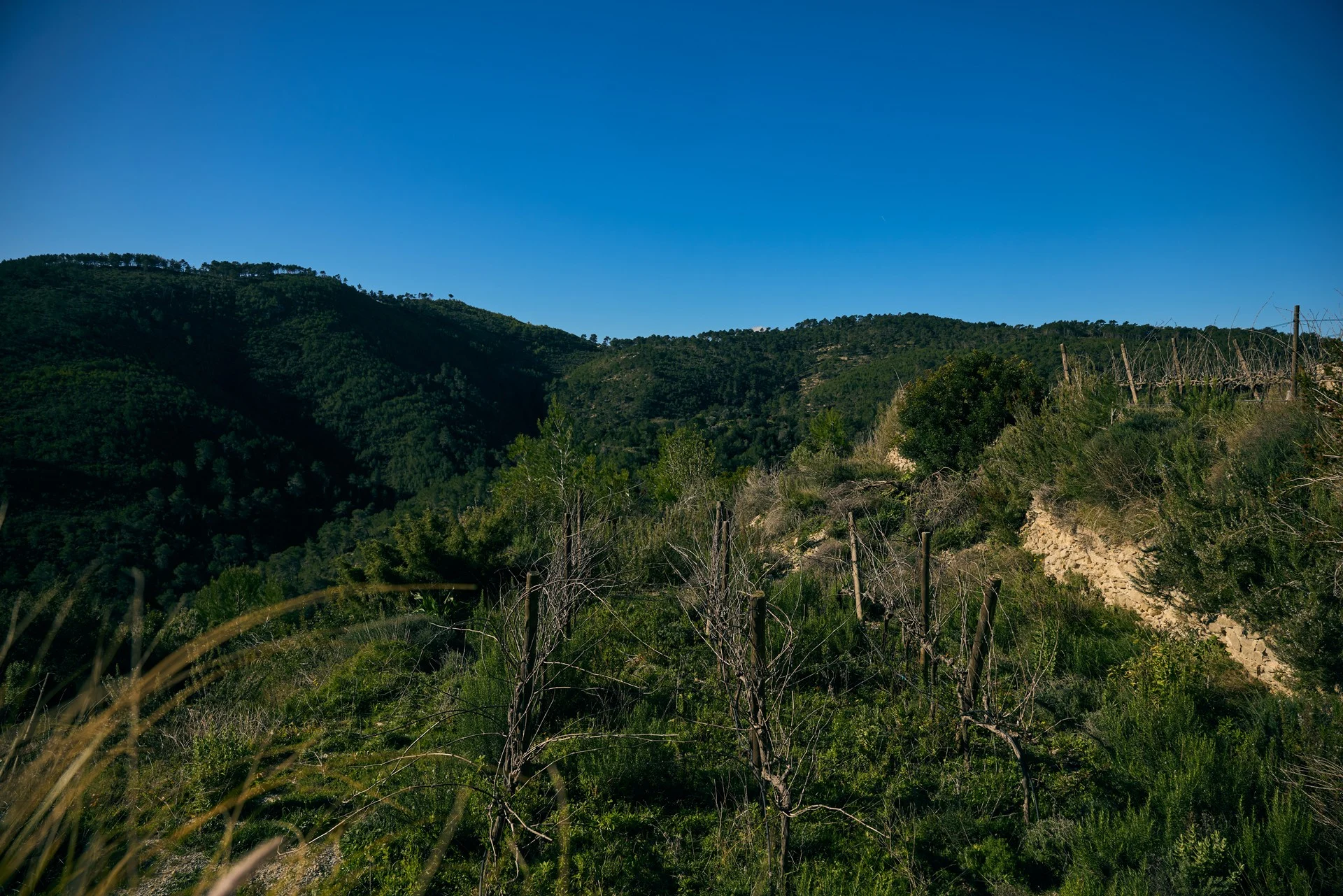
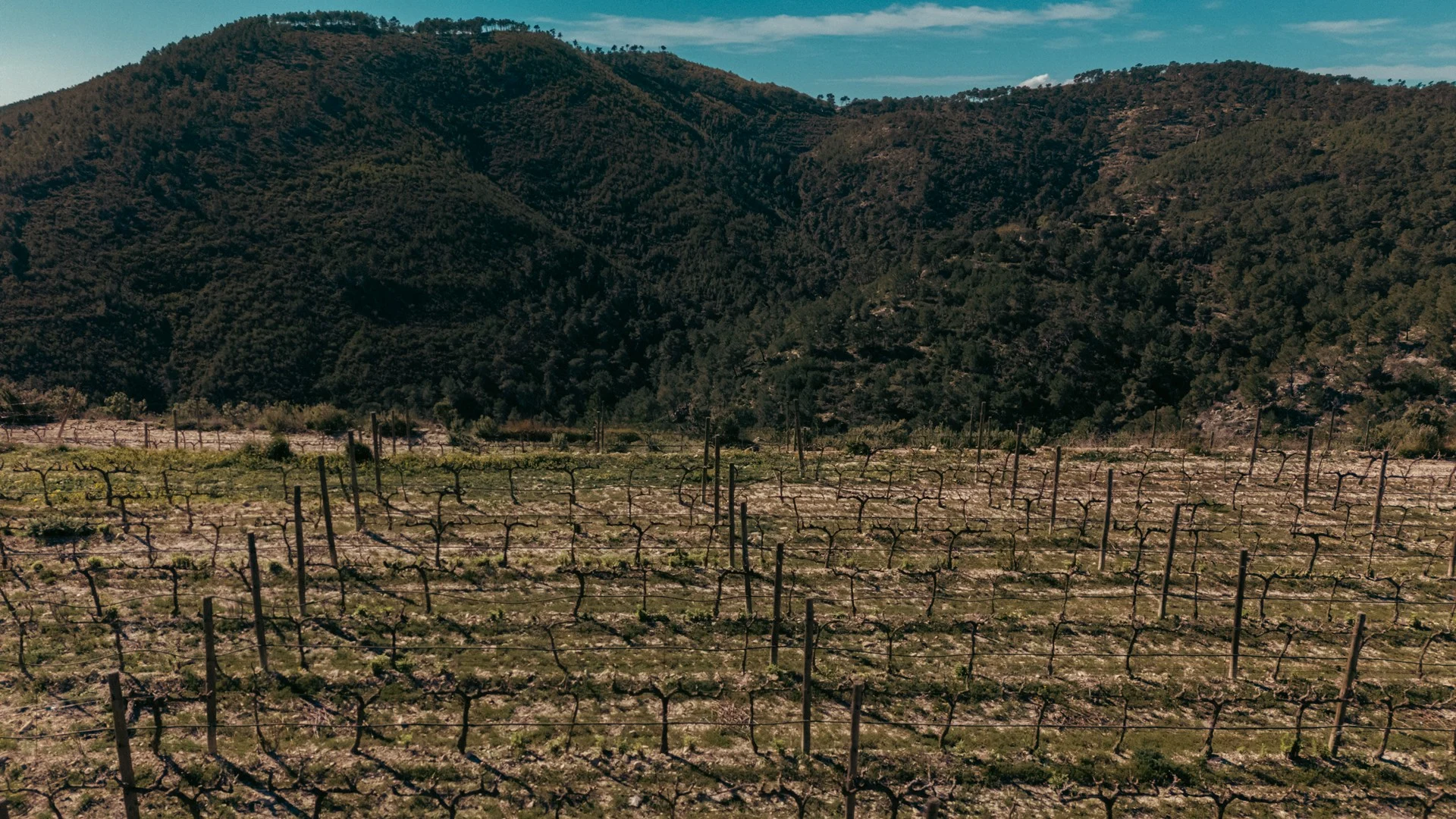
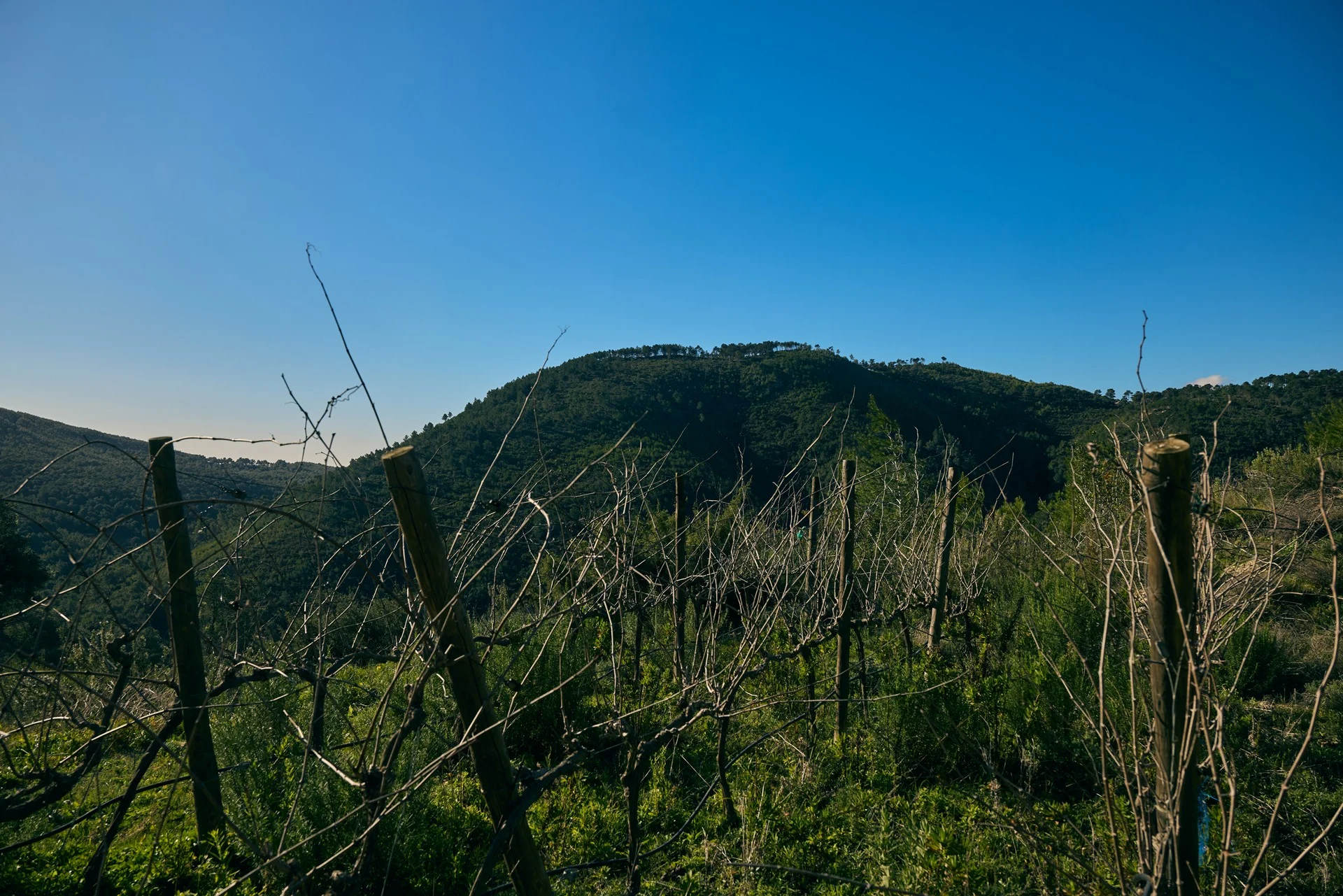
The Blacknose vineyard sits right where the Pla and the Serra de Morna break the border with the municipality of Sant Joan de Labritja. The air is pure and the day is radiant, with an intense blue sky ideal for underexposing a few shots to capture the sharp profiles of the vines being slowly pruned. The history of this vineyard was inevitably shaped by the massive 2011 forest fire, which originated precisely on the slope of the Serra de Morna belonging to the Sant Joan district.
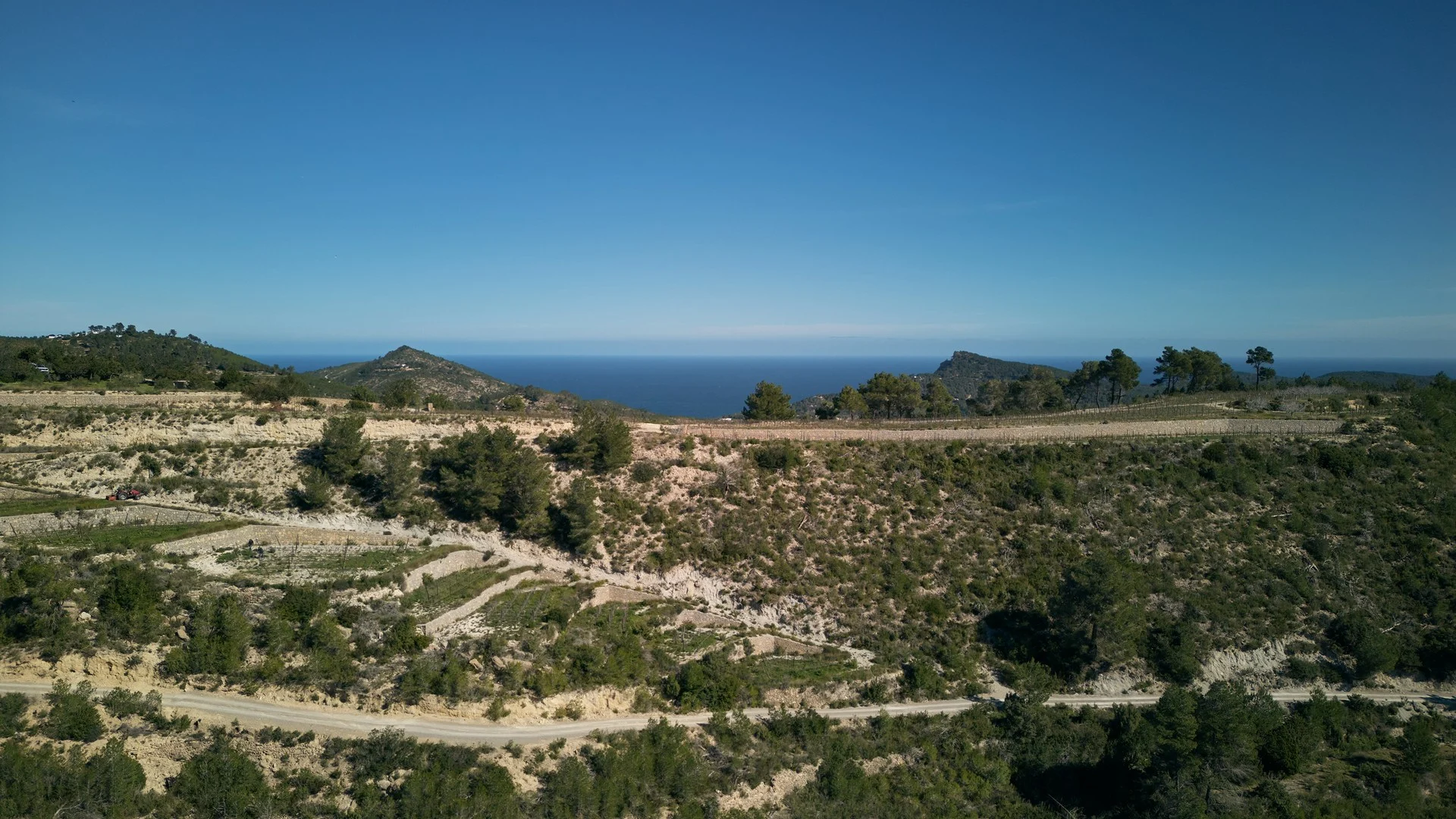
The fire, caused by a local beekeeper’s carelessness, swallowed more than 1,400 hectares of pine forest connecting the municipalities of Santa Eulària des Riu and Sant Joan de Labritja. It was a terrible loss for our natural heritage, leaving scars that can still be read today on the surrounding hills. Among those hectares were those of Tino and Peter Lehner.
Rom: Were you still living in Switzerland at the time?
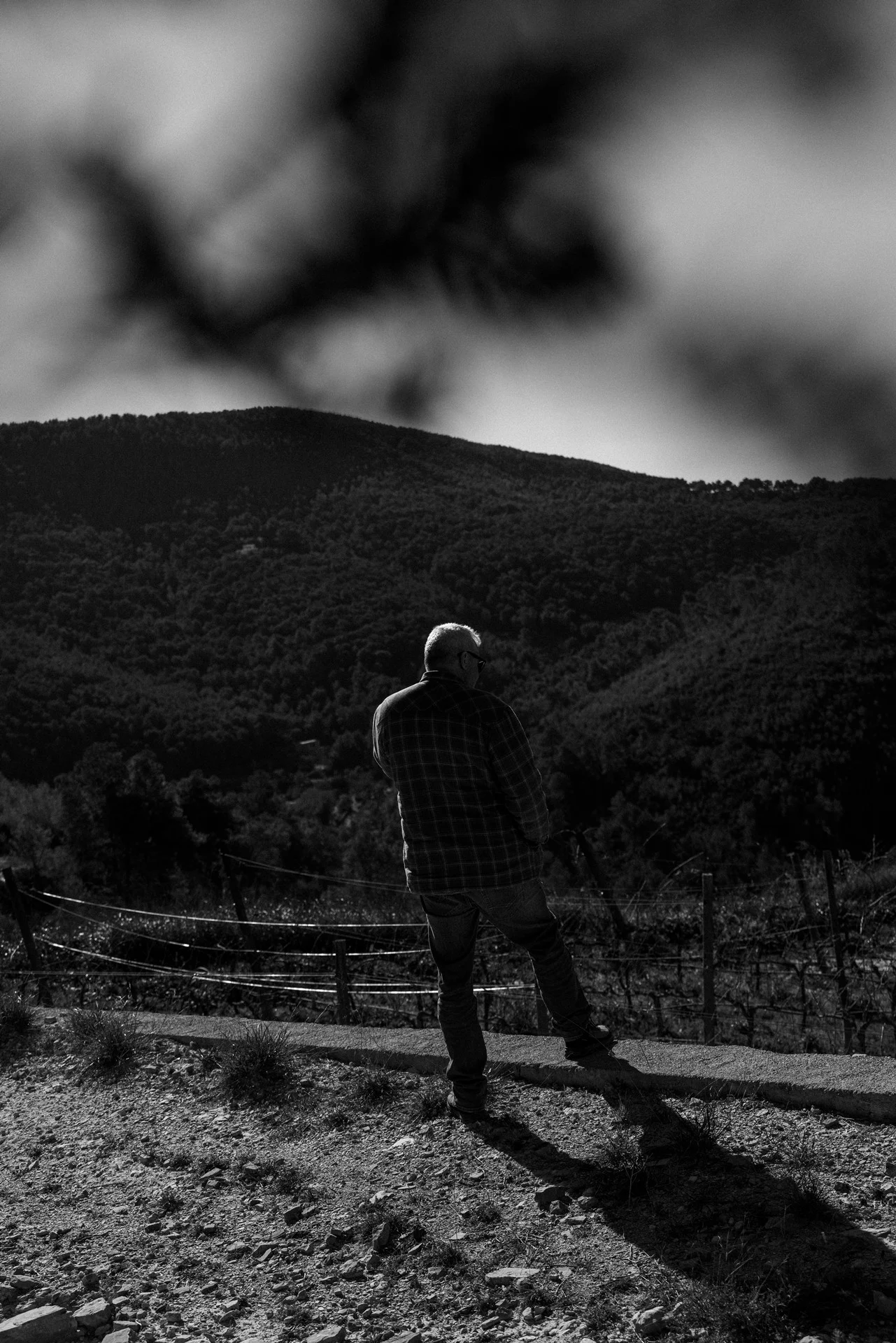
Peter: Yes. We spent several weeks in summer, sometimes we also came during the fall, Christmas…. Sometimes all together: my brother with his family, me with my family. And then the vector of this agricultural adventure was this Morna valley fire in spring 2011, which spread from the Morna valley over the hills and within 24 hours ended up in the sea in Cala de Sant Vicent. It burnt about 1,400 hectares of forest, which is one-third of the forest in the north. The firefighters did a fantastic job because they managed to preserve all the houses and some vegetation around the houses. I came here one week after the fire, and this little forest was still smoking on the soil. And then my brother also came and we walked around and we found out that there were many more terraces whose existence we completely ignored.
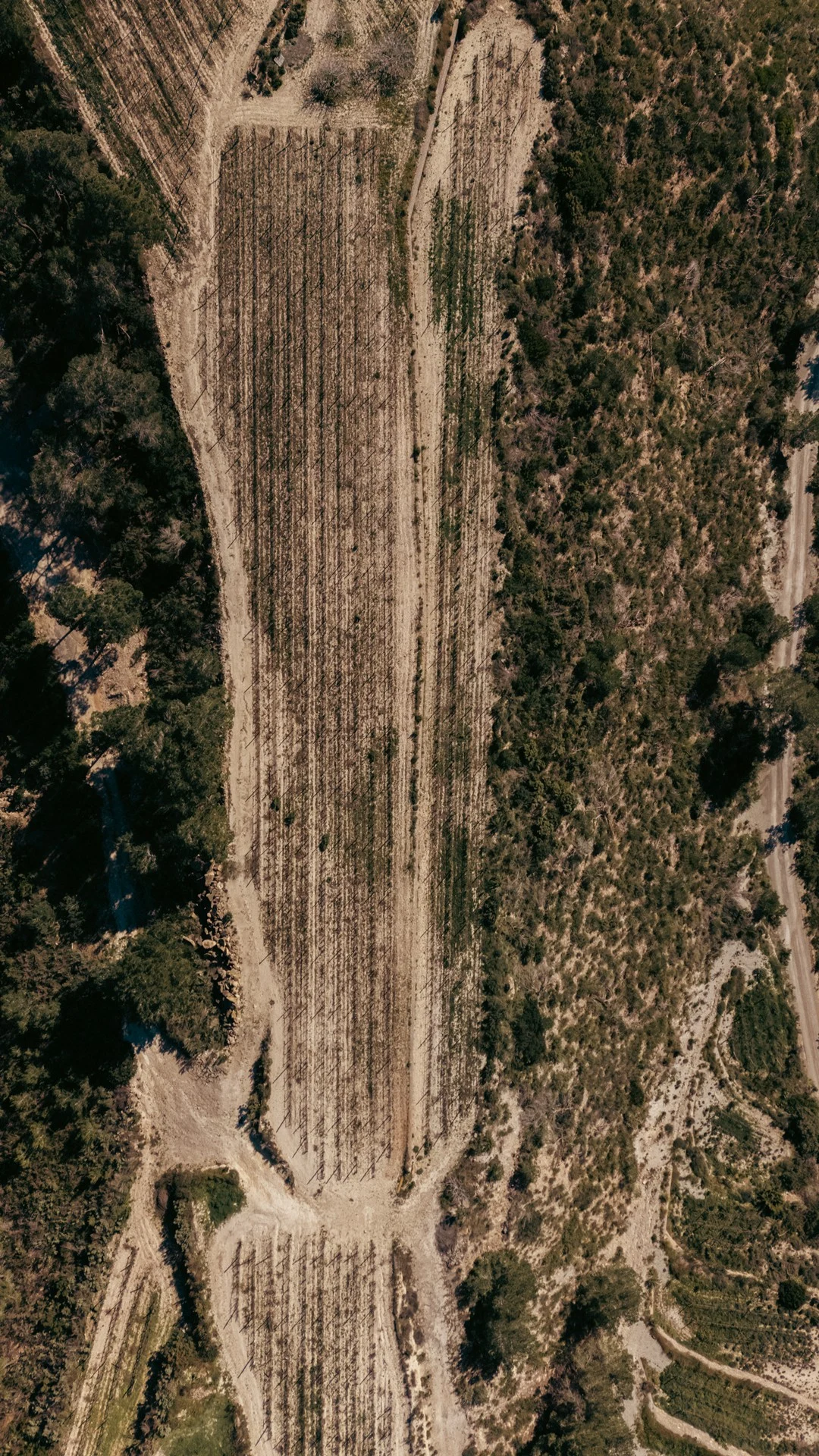
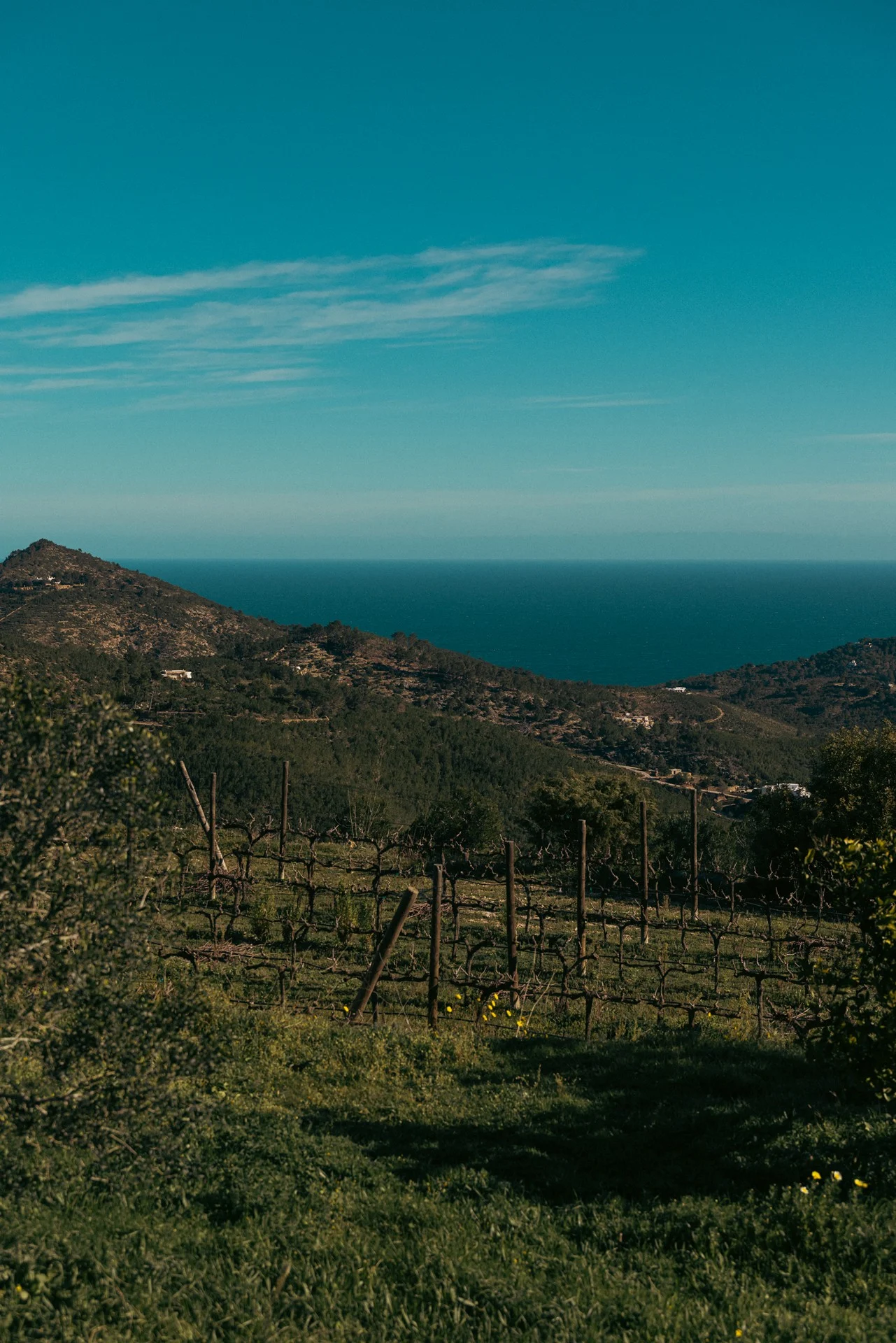
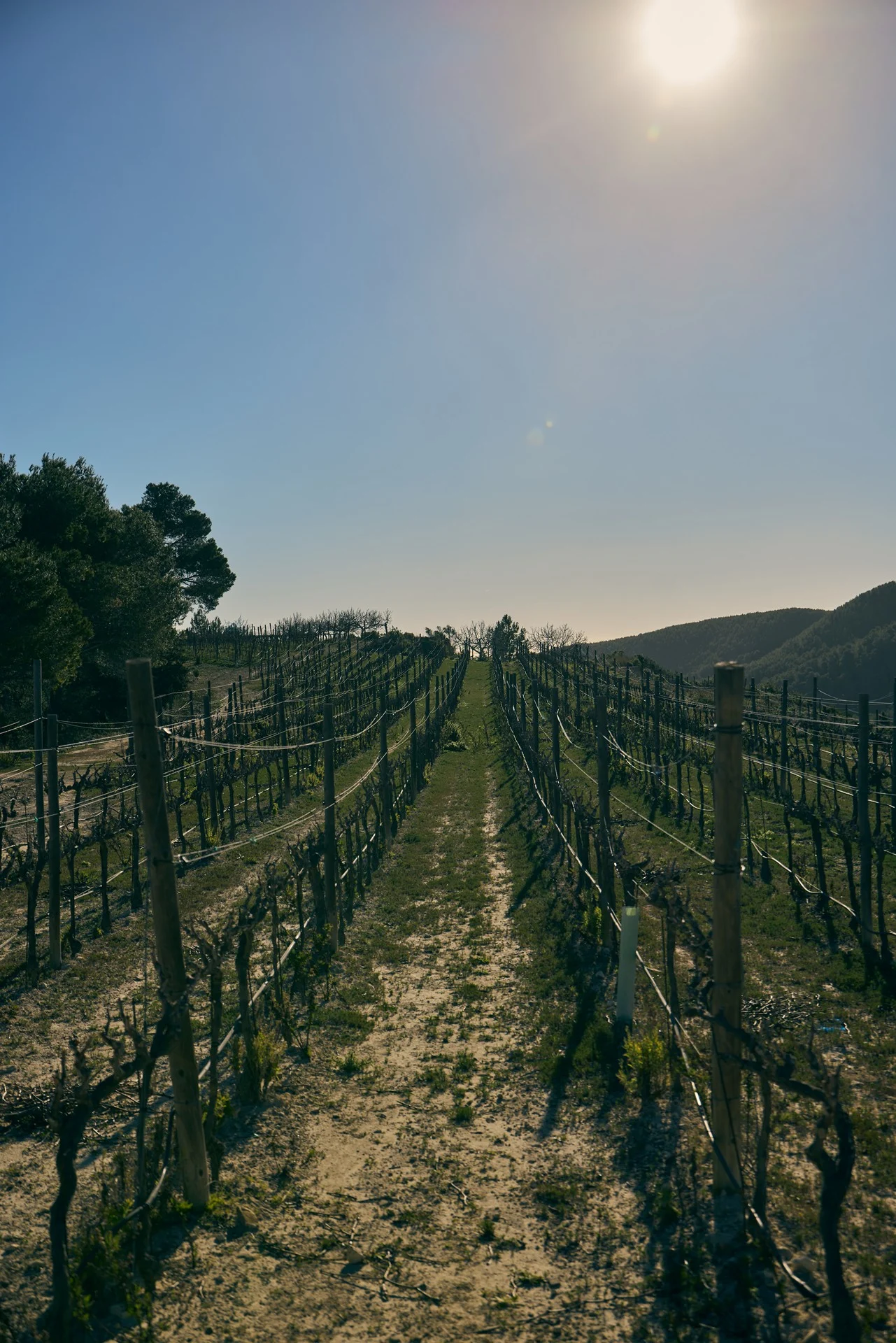
A biblical image. Black, barren soil, still smoldering. Standing with his brother, Peter looks in amazement at a relic: the fire has consumed all the dense vegetation that once hid the dry-stone walls—known locally as paret de pedra seca or marges in traditional Eivissenc. Ancient cultivation terraces cascading down the slope. What can be done here? How do you intervene in a devastated land?
Peter: At that moment we started to be intrigued. «Ah, okay. So there was much more culture here than we thought.» And then I started to investigate on the internet and I found an aerial view of 1956. And that’s amazing because you could see that all the hills here were cultivated. That’s not that long ago. But probably after that, in the early 70s with the tourism, unfortunately, the agriculture really dropped; the people probably had other things to do.
Mediterranean Terroir: Reviving Native Grapes like Monastrell and Giró Ros
The seed was planted. Following several soil analyses, preparing the terraces with wheat crops—which weren’t harvested or sold but served as a feast for birds and rabbits—and testing water from their own well, 2014 arrives, and Blacknose launches its first planting: Syrah and Monastrell. These red varieties are resilient to the subtropical Mediterranean climate, with Monastrell being the native variety perfectly acclimated to the severe Pityusic droughts. In the second planting phase, the Lehners decided to add the French Cabernet Sauvignon in 2016.
This triad (Syrah, Monastrell, Cabernet Sauvignon) would become the classic Blacknose blend. The Chardonnay originates from an estate in Santa Agnès de Corona, home to vines over thirty years old. The vineyard had been neglected to some degree, thus severely afflicted by powdery mildew and downy mildew, prompting Peter Lehner to take over its management and gradually restore it to health through biodynamic practices (Demeter). This year, 2026, marks the first harvest in which the vineyard has fully recovered—revitalized and completely free of diseases. Lastly, Giró Ros was planted in 2020—a white grape of fundamental identity in the Balearic Islands, native to Mallorca and rescued at the end of the 20th century to craft fantastic unique white wines. This is the grape that will bring Peter Lehner the most joy and passion in his quest for a distinct identity and specific flavor in his signature Ibiza white wines. We will see the first one vinified this year, in 2026, under the label Podenco Loco.
Rom: When was the first year you could finally bottle your wine and introduce it to the market?
Peter: The first vintage we sold was 2017. In 2017 and 2018 it was only Monastrell and Syrah, a red wine. After 2018, in 2019, we started by blending in the Cabernet Sauvignon and since then that is basically the Blacknose, our Vino de la Tierra de Ibiza red wine. We produce it ideally every year with some exceptions: in 2022 we had a total loss because we caught mildew and oidium. In 2023 we had a nice quality but no cellar where to elaborate, so we had to transport the grapes in reefer trucks to the mainland (Jumilla, Murcia). It was a very heavy exercise not having the total control of the wine-making process. The wine came out okay, but obviously, it was not Vino de la Tierra de Ibiza; all three from 2023 (white, rosé, and red) are only Podenco Loco that was labeled as Vino Varietal.
The Labeling Odyssey: Losing the «Vino de la Tierra de Ibiza» Designation
To help the reader understand the odyssey of labeling under Ibiza’s regulatory framework: we only have six winemakers on the island. Few possess facilities capable of hosting external vinifications. Faced with the dreadful prospect of losing the entire 2023 harvest, Peter came up with the idea of moving the entire production to Jumilla to vinify there after failing to find a solution in Ibiza. It was a Quixotic process where enological supervision is naturally diluted, and some of the identity and terroir that Blacknose seeks is lost during transfers.
What the Lehners did not know at the time was that by moving grapes from an Ibizan vineyard to be vinified in a winery outside Ibiza—outside their territory of origin—they automatically lost the right to use the «Vino de la Tierra de Ibiza» designation on the label. Both vineyard and winery must be registered in Ibiza. Under the regulations, harvested grapes must be vinified in a registered winery on the island. If they leave, the wine must hit the market as a «Vino Varietal» (Varietal Wine), without protection, without a godfather. What Lehner was able to prove, logically, was the traceability of his grapes to qualify for that labeling and show they come from his vineyards overlooking the Morna valley.
Rom: What has taught you this very expensive and somewhat disappointing experience?
Peter: Not only was it very expensive. There’s also the matter of the identity of the wine. When we say the «expression of terroir,» if you elaborate it outside of the island it’s not really anymore this idea, even if the grapes are from this farm. So in 2024 I decided not to go again to Jumilla and I didn’t do any wine except some experimental wines. We did this (experimentation) with the white wine we now drink.
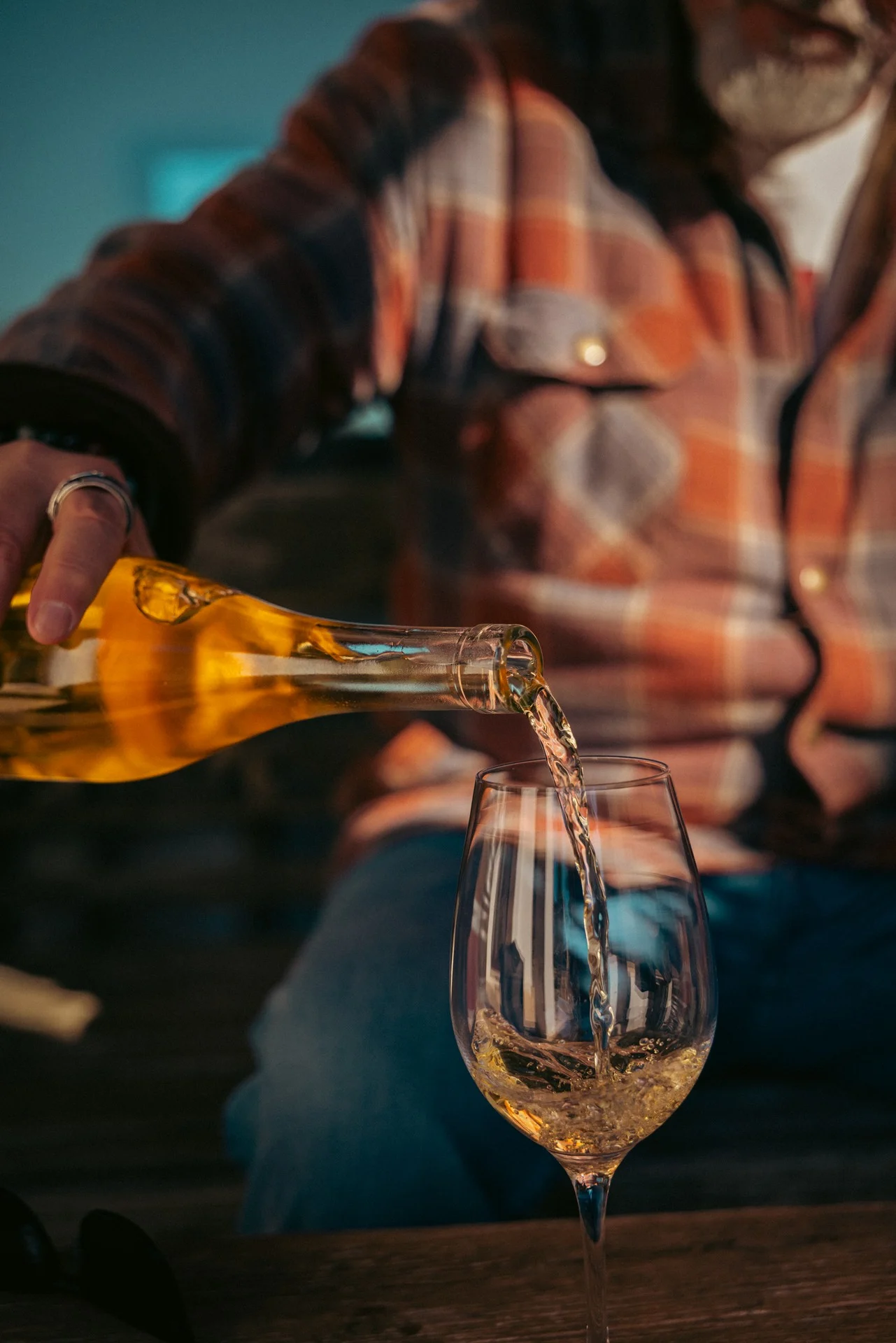
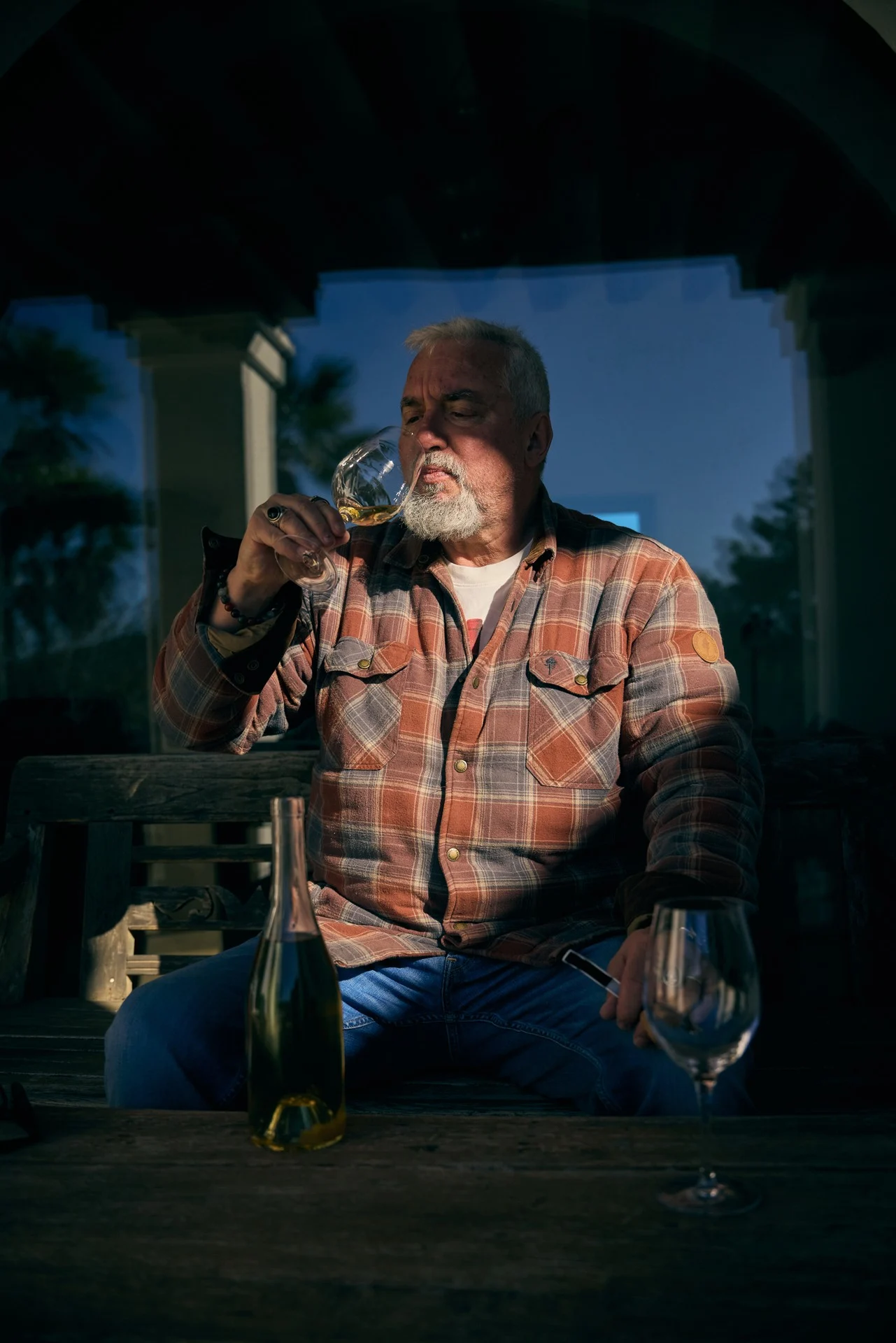
Between questions, Peter pours me a glass of a blend dominated by Giró Ros (80%) and completed with Chardonnay (20%), showing a striking straw-yellow color with golden highlights. This is the surprise I mentioned earlier: making its market debut this year (around 450 bottles), in 2026, from the 2025 harvest. Yet the bottle we are tasting is where it all began—an experiment from the previous year in which the local variety boldly claims center stage.
On the nose, it opens immediately with pronounced quince and ripe pear, layered with subtle citrus and herbal notes. Playful lees work from bâtonnage imparts a beautiful, buttery texture. On the palate, it strikes with a vibrant acidity; the fruit is fresh, yet reveals deeper, more decadent layers—I prefer to call it goloso (voluptuous) rather than merely crisp or green. A captivating white wine that instantly evokes the spirit of Mallorcan whites aged in clay tinajas, neutral barrels, or large foudres.
Rom: This is great! I like the acidity; it’s right on its point and has a good fruitiness. You have some of these exotic fruits, but they’re not invasive. Great balance.
Peter: It’s nice, eh? Reminds me a lot of membrillo. This is typical of the Giró Ros!
Rom: I think it’s a very sellable white wine for Ibiza this summer. Fresh and easy to drink, but with character.
Peter: Exactly. You can have it also without food or with food. In 2024 we decided not to repeat the (Jumilla) exercise, we did experiments and we sold some grapes to other wine makers on the island. And then last year (2025), fortunately, but really at the very last minute, thanks to the introduction of David Lorenzo from Ibizkus, I met Toni Xumeu again.
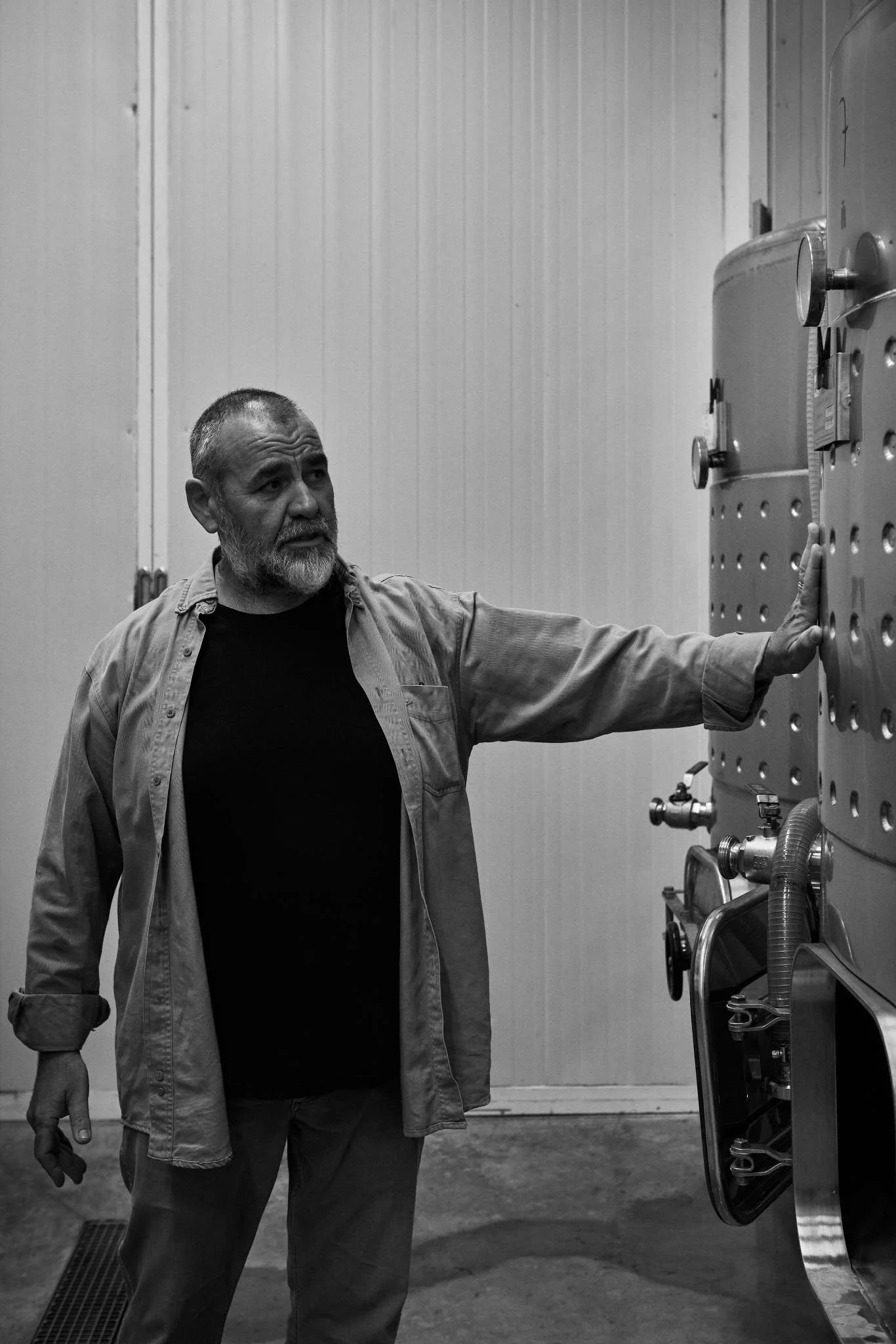
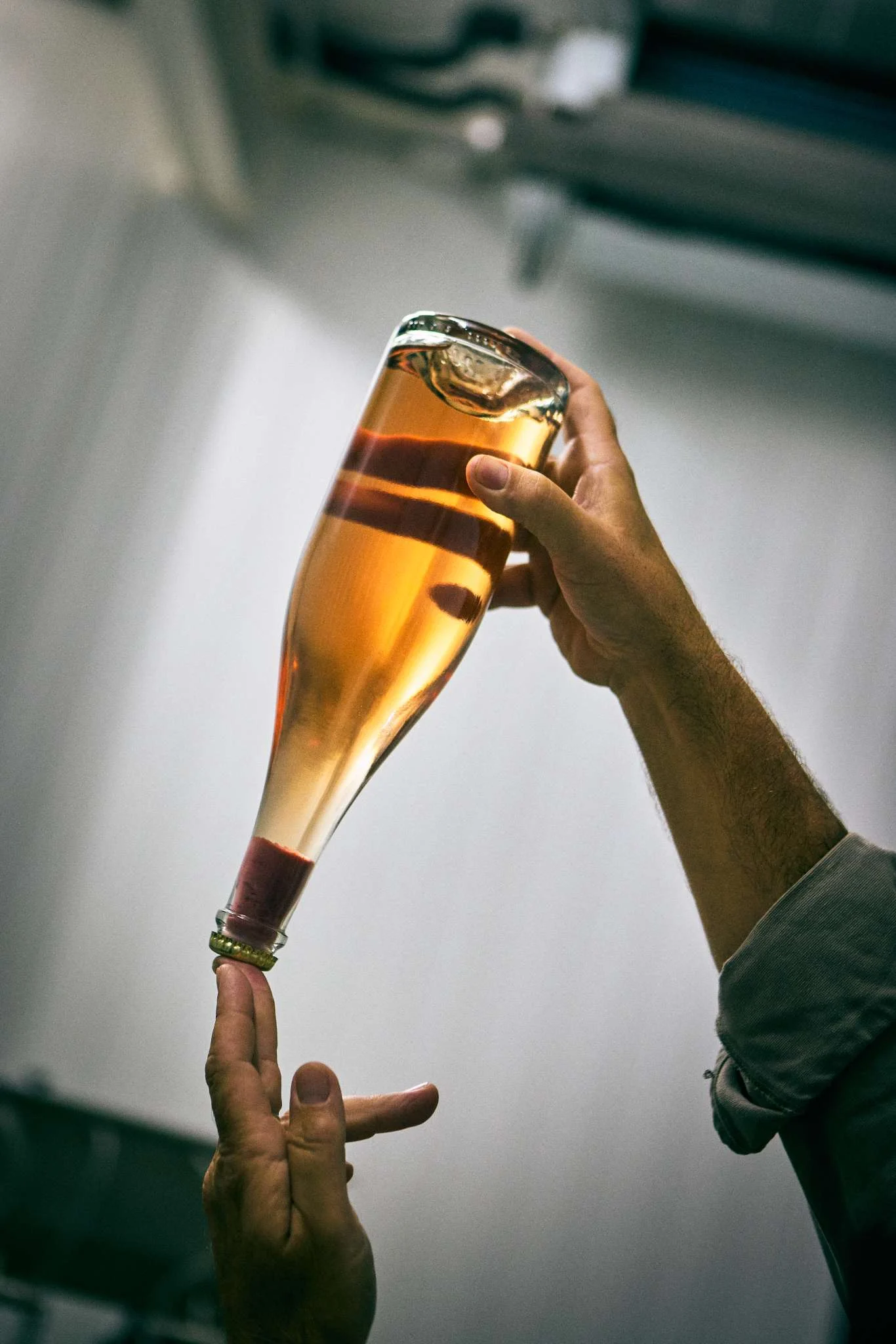
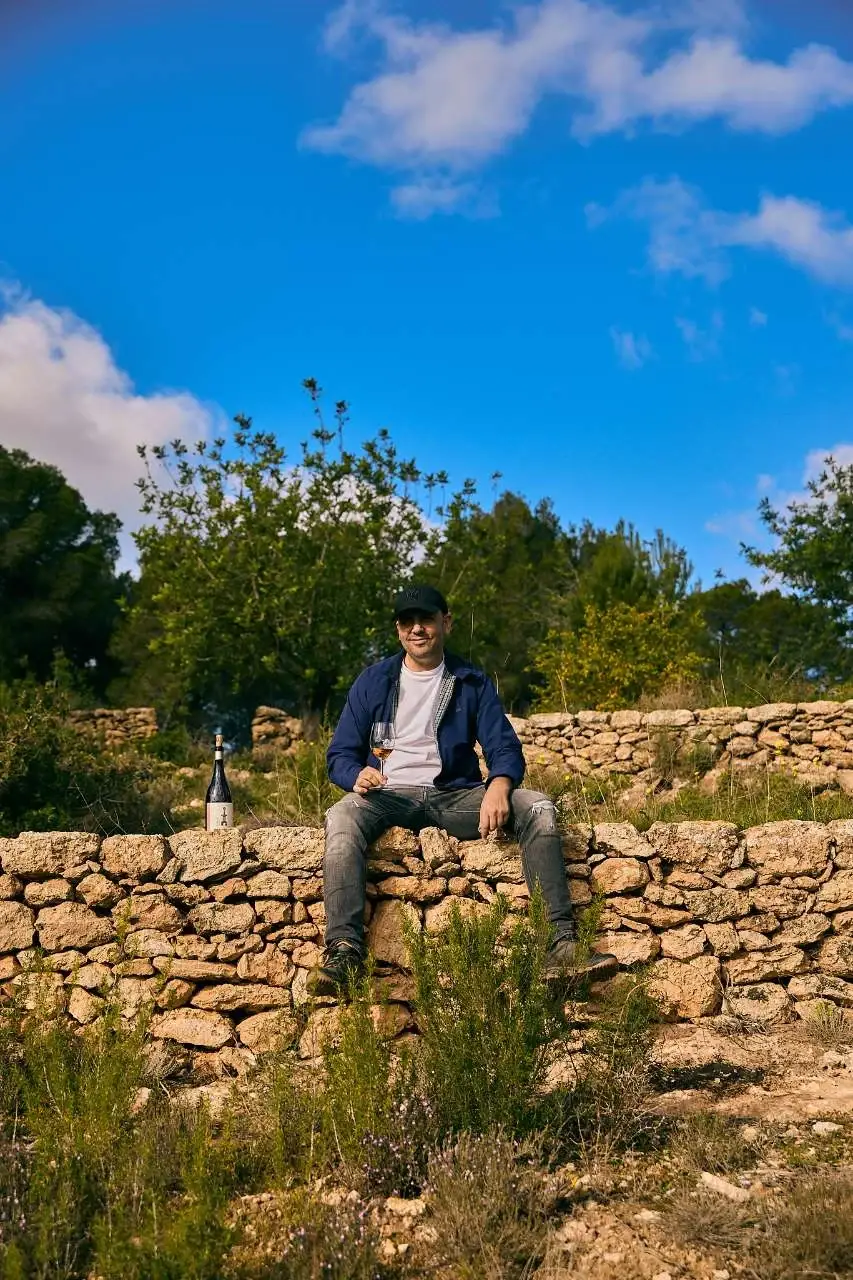
I knew him before, but he told me when I asked two or three years ago if he had space, he said, «No, my cellar is too small.» But last year he opened his arms and he said, «Yes, I can give you part of my cellar to elaborate your wine here». I was so happy, but we didn’t even have time to speak about the certification process for organic. So despite the fact that our grapes are organic or even biodynamic, his cellar had not passed the examination before we entered the grapes. The certificate needs to be done before entering.
Interviewing Peter Lehner is like watching a movie full of hardships tormenting the protagonist: every step he takes for the love of his wine encounters five unforeseen or unknown issues, mostly administrative. The anecdote he shares relates to organic labeling under current EU legislation: he didn’t have enough time to audit the winery of the fellow producer who took him in—sparkling wine expert Toni Xumeu of Can Vinya.
Although his winery meets the requirements, the certification wasn’t requested in time. The law requires audits to be completed before the grapes are brought in for processing. When we joke about the rush and stress of harvest, or equipment that sometimes fails to arrive on time, Peter is incredibly approachable. He doesn’t hesitate to share a welcoming message: any wine lover in Ibiza is invited to see how they work the vineyard (and their olive groves) under certified organic practices, in full transition toward the official steps of biodynamics, even though they already apply its philosophy and methods in practice.
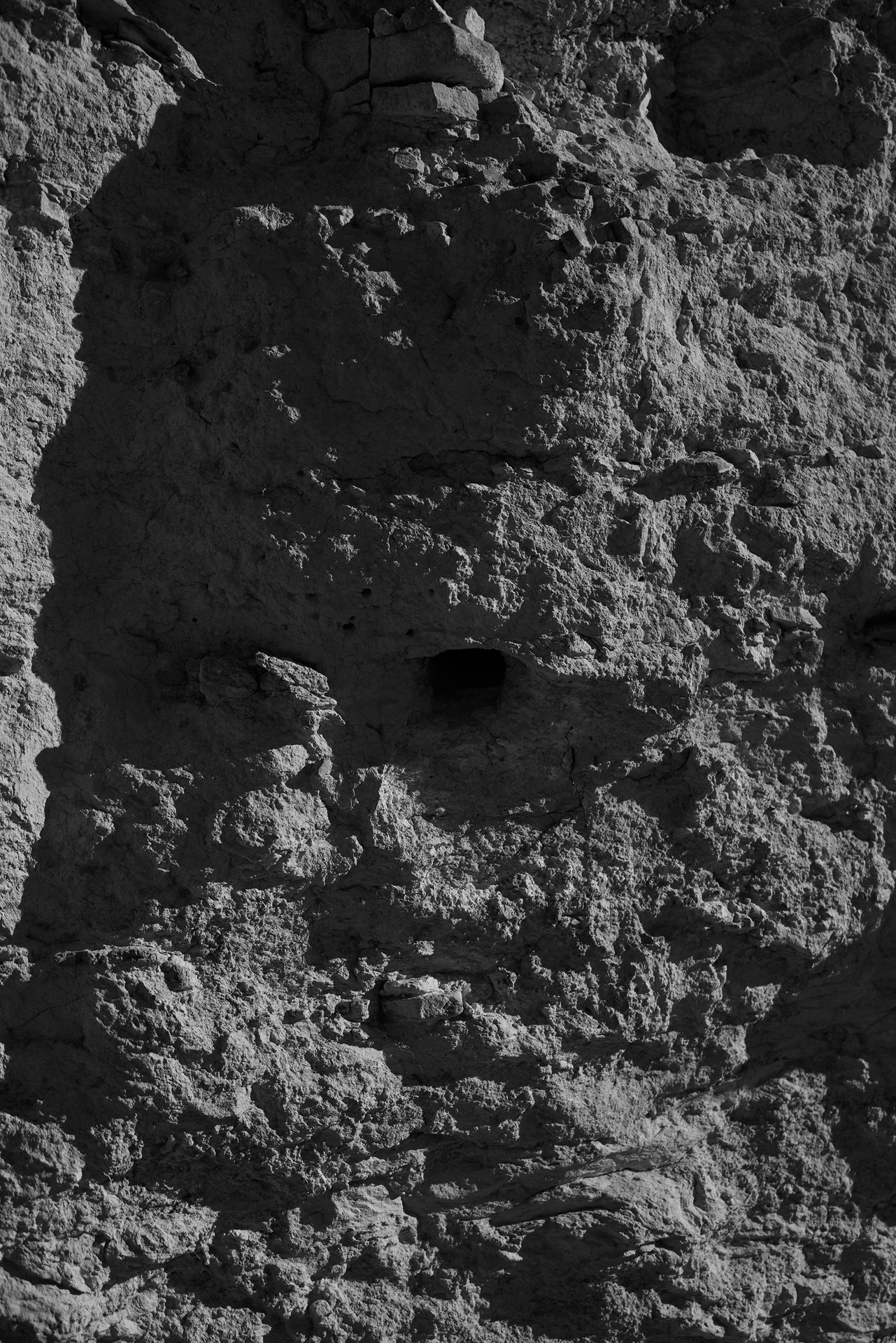
Walking down to the dry-stone terraces, he shows me a wall of stone and sand that resembles a soil profile pit. Birds have decided to dig tunnels for their nests. He lets them live their peaceful lives, never interfering with their activities. Further down, we look at the magnificent terraces whose dry-stone walls are being painstakingly rebuilt and maintained step by step. There we cross paths with the president of the Santa Eulària des Riu agricultural cooperative. A genuinely Eivissenc man.
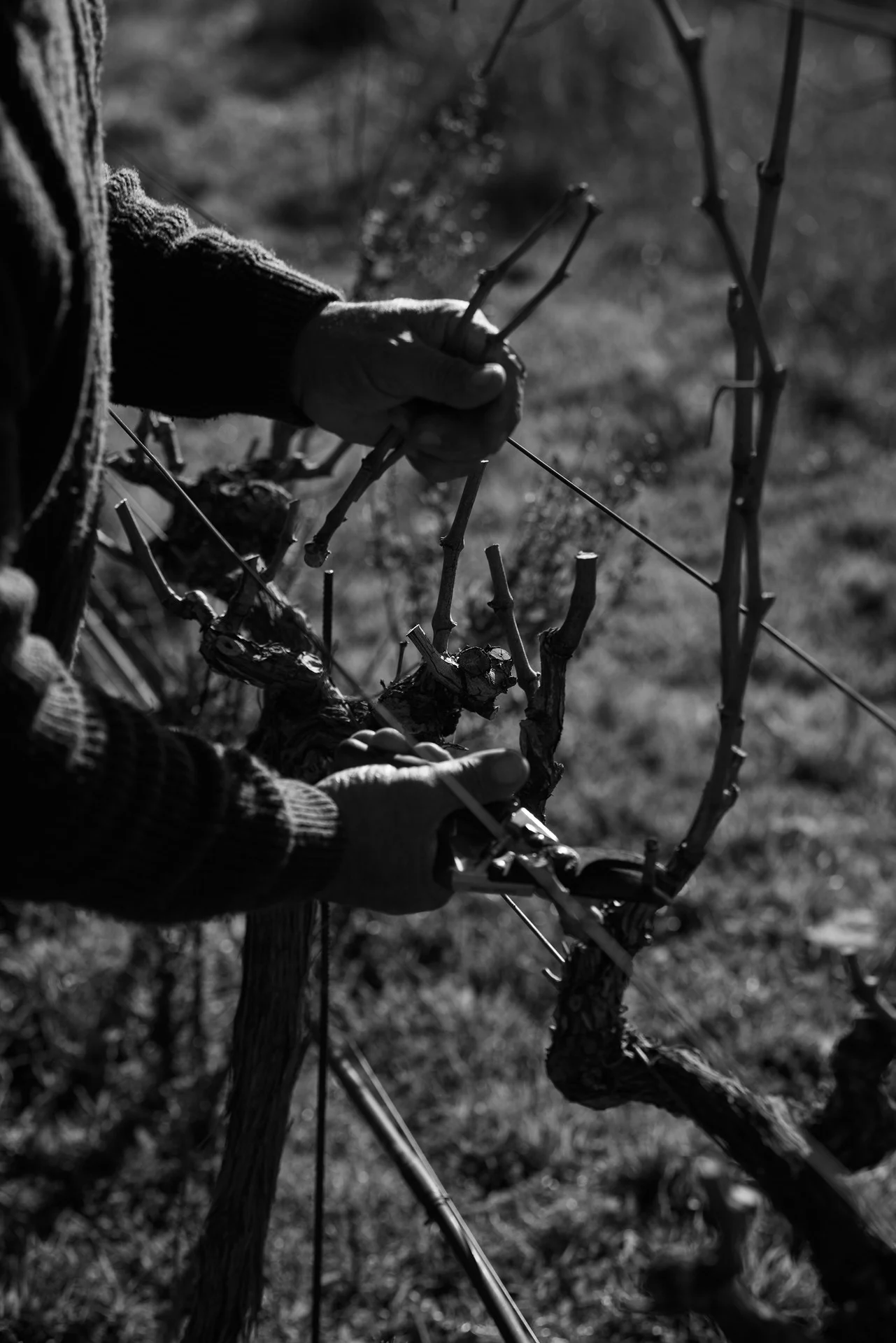
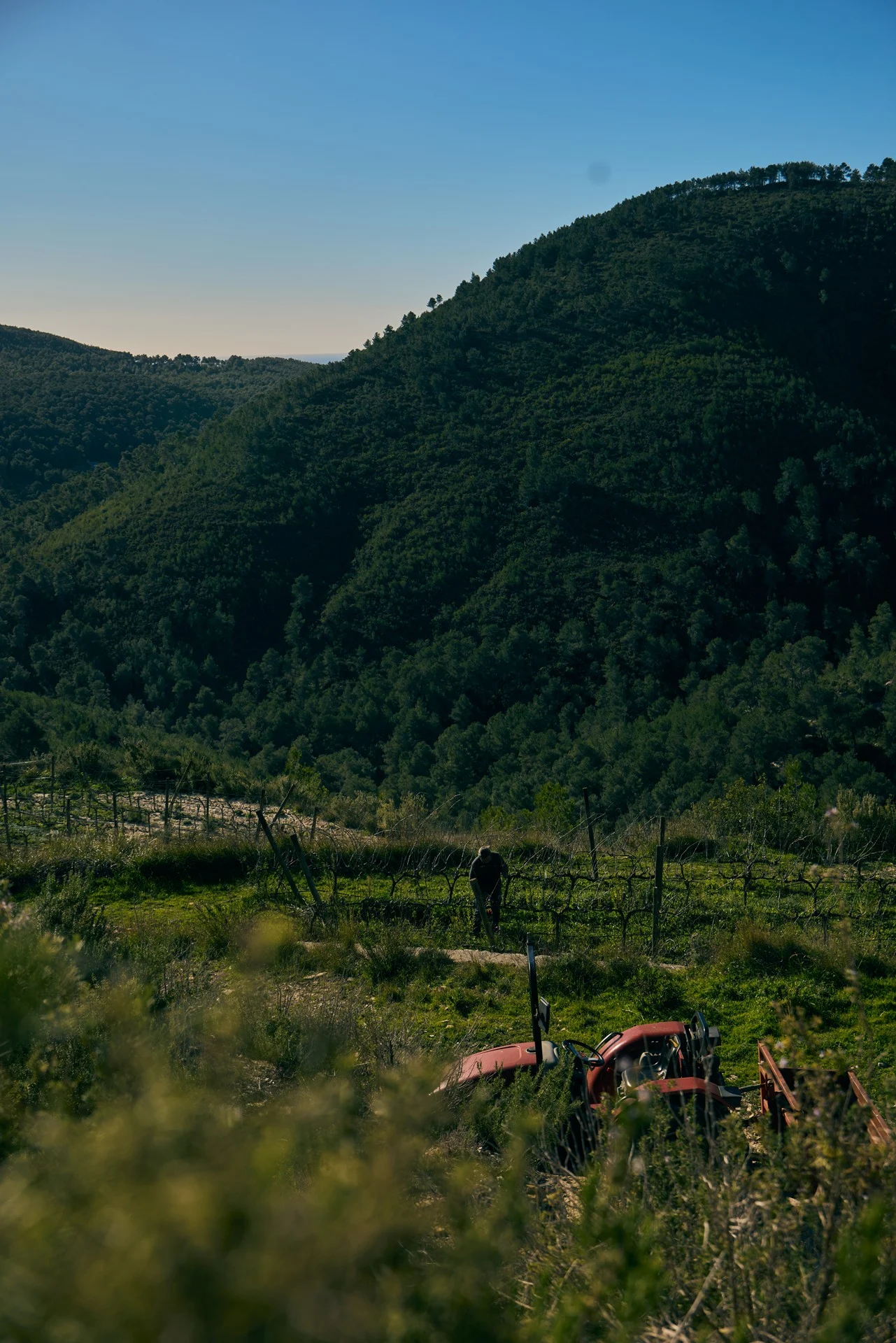
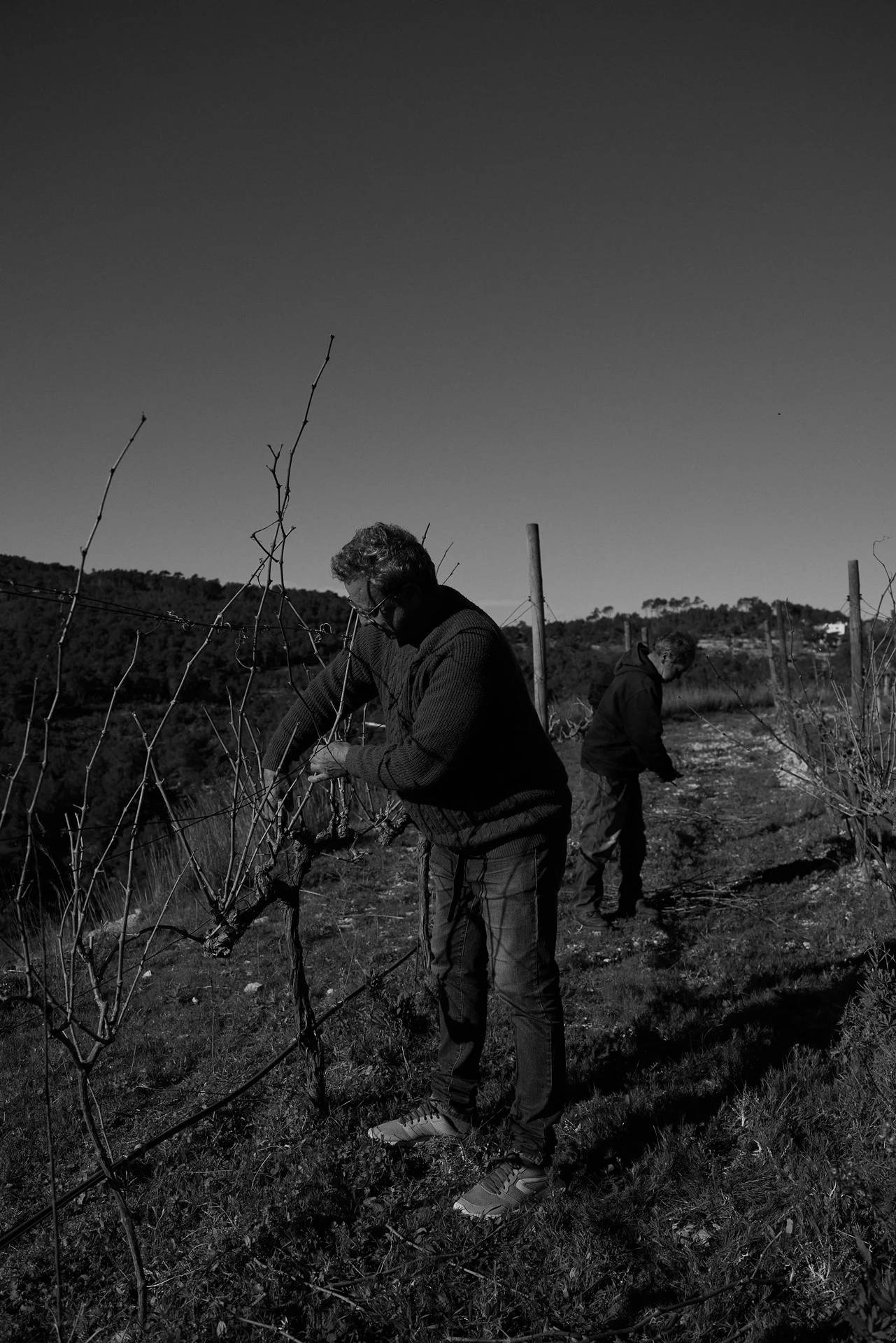
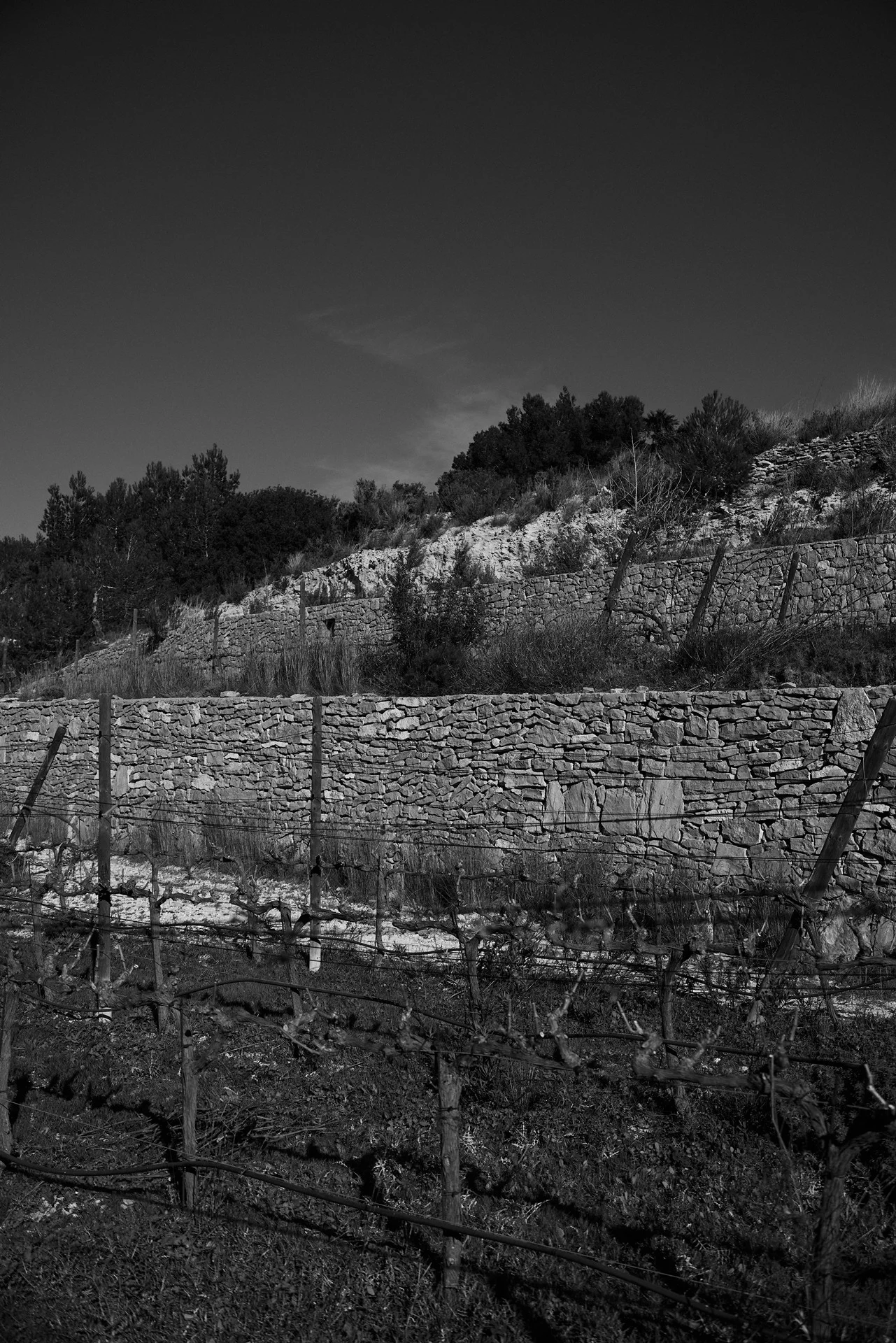
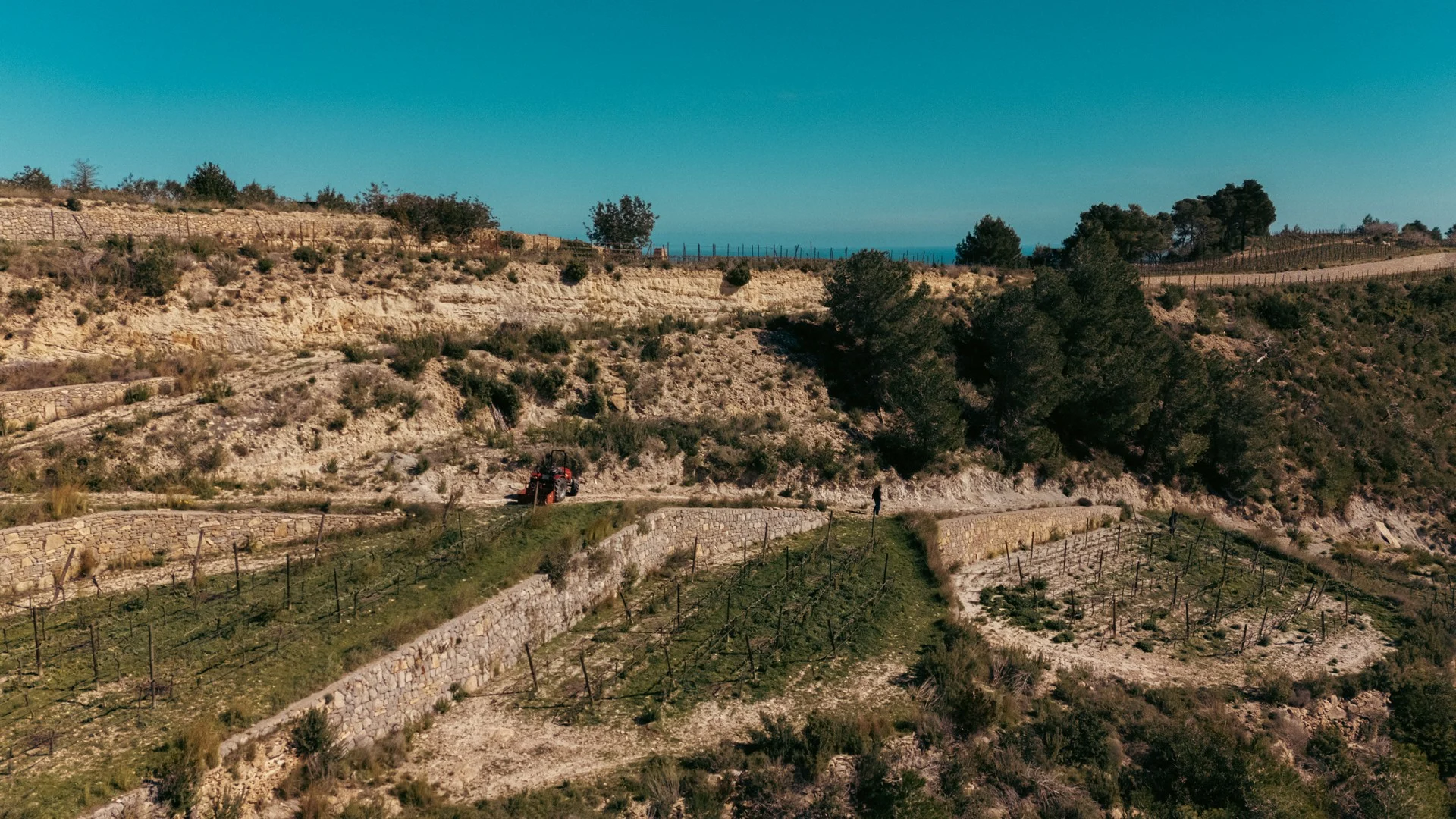
With great skill and knowledge, he and a colleague perform the winter pruning on the trellised vines. You can see the welcoming floral vegetation around the vines, insects of all kinds, aromatic herbs, healthy topsoil, and a harmonious coexistence with other plants and organisms. Opposite us lie the once-charred hillsides, where young pines and green scrub are fighting to regain their vigor.
Rom: When did that happen? (the rush to Toni Xumeu’s cellar to make the wine). September?
Peter: No, in August. Even the Cabernet was harvested in August. But the important thing for us was to do again a Vino de la Tierra de Ibiza and this time we will for the first time also have a rosé with that designation. I don’t know yet whether we will call it also Blacknose or if we keep the Podenco Loco name. Obviously, Blacknose is the main brand for the Vino de la Tierra de Ibiza and this originates from these half-wild sheep we have in Switzerland, in the mountains of Valais where we have our roots. I thought the second name should have a better connection to the island in the brand name, and that’s how came the name Podenco Loco.
To keep the reader on track, let’s unpack the administrative and viticultural labyrinth that gave birth to Blacknose Ibiza’s second brand: Podenco Loco. Podenco Loco first entered the market in 2020. At that time, it was introduced as an alternative label to save that year’s red wine, which, due to an administrative oversight, missed the registration deadlines for the «IGP Vino de la Tierra de Ibiza.» Failing to meet the submission deadline to comply with the product specification left Peter Lehner with no choices: he had to resort to the generic «Vino de España» label as a wild-card solution. This «wild-card» labeling allows any grape, any blend, and vinification anywhere in Spain using Spanish vineyards located in any territory.
Demystifying Wine Classifications: Why «Vino de España» Isn’t Inferior
A warning to the reader here: this is sometimes labeled an «inferior designation,» but from a technical standpoint, there couldn’t be a more unfair statement. Single-estate wines (Vinos de Pago), DOCa, IGP, VT, etc., are not automatically superior or inferior in quality just because they belong to a certain category. It has absolutely nothing to do with the wine’s inherent quality.
Today, no serious sommelier school teaches this as a pyramid, because it isn’t a quality pyramid. It is simply legislation for a liquid food product: wine. A «Vino de la Tierra de Castilla y León» can be objectively far superior to an industrial D.O. Ribera del Duero made with little love for the vineyard and its wines, even if the latter meets all D.O. requirements. Yet that independent winegrower and producer bottling as a VT from Castilla y León might have an incredible wine defined by measurable and quantifiable factors: grape quality and health, meticulous vineyard management, low and controlled yields, top-tier vinification, premium corks, strictly manual harvesting, multiple passes through the vineyard, manual sorting tables, and organic and biodynamic care rooted in the terroir…
That is how Podenco Loco 2020 became a «Vino de España,» even though its blend of Syrah, Monastrell, and Cabernet Sauvignon is identical to the flagship Blacknose blend. The Jumilla case we mentioned occurred during the 2023 vintage; in 2023, Peter did not have his own winery for vinification. He didn’t want to lose the harvest, but we are on an island. What do you do with so little time? He improvised and found a winery in Jumilla that offered him space and equipment to craft the wine there. He loaded all the grapes into refrigerated trucks and set off for Jumilla.
What happens next? The product specification for the «IGP Vino de la Tierra de Ibiza» strictly requires (with good reason) that both the grapes and the winery must be located on the island. The moment the grapes leave to be vinified in another territory, the regulations are broken, and they can no longer market the wine under that protective IGP. Thus came the idea to release Podenco Loco 2023 as a white, rosé, and red «Vino Varietal»—in this case, featuring a blend of Monastrell and Cabernet Sauvignon, but without Syrah for the reds. In Podenco Loco 2023, Blacknose connoisseurs will notice a fruitier, fresher, and lighter profile due to the absence of Syrah. Peter mentions that a few bottles of Podenco Loco 2023 white, red, and rosé can still be found out there, though the iconic Blacknose 2021 remains the most common bottle available today.
At the time of this interview—recorded in February 2026, published and updated in July 2026—the year’s wines are sleeping in their stainless steel tanks, French oak barrels, and demijohns. The white wine we are tasting rests half in barrels and half in demijohns. Bottling is imminent.
Rom: You have to be ready.
Peter: In total, we will have about 3,000 bottles this year. We just tasted them two days ago (18th February, 2026); they are really nice and the laboratory analyses are all very good. We also did two reds; one red we did by working full stem. We didn’t de-stem the grapes, just ferment the berries or put the whole bunch of grapes, crush them a bit, and then let that ferment. It gives a nice freshness in the wine. It’s delicate because you have to harvest at the right time; not too early because then the stems are green and can bring some grassy taste which we don’t want. It was a nice experiment, so probably this year we are going to do one batch with that vinification method.
Where to Buy Blacknose and Podenco Loco Wines in Ibiza
Like other signature projects in Ibiza, we are looking at a 2026 production of around 3,000 bottles. A few reach restaurants and specialty shops on the mainland, but almost everything stays in Ibiza or travels directly abroad—with Switzerland absorbing roughly 61% of all Ibizan wine exports in 2025. They love Ibiza wine as a high-end cult item. You can buy them at: Vino & Co, Bodegas Ribas, Cooperativa de Santa Eulalia, and Cooperativa de Sant Antoni de Portmany. You will also find them in many restaurants, such as Juntos Farm.
Regarding the new blend of Giró Ros and Chardonnay we are drinking—which, as the conversation flows and the wine breathes, releases an aftertaste of stewed fruit and a very, very pleasant aroma of that same quince—Peter shares his vision as both a wine lover and a producer working at such a personal scale.
Peter: What we do—and I hope you feel that in the wine—is we try to do gastronomical wines that you can enjoy with or without food. But they need to be really top. Our production is so small that we don’t want to be another brand; we really want to differentiate ourselves. That’s why for me it was more important to plant something original like the Giró Ros, which comes from Mallorca, rather than to be the 10th producer with the same white wine variety. Even knowing that by blending the Giró Ros with Chardonnay, it cannot be a «Vino de la Tierra» (…) production of Giró Ros is about 1,500 plants; it will never be thousands and thousands of bottles. I think the market is big enough and there are enough wine aficionados for whom the label is not the most relevant, it’s the product itself.
If you are interested in acquiring any of these limited vintages, please do not hesitate to contact me directly. As a sommelier, I would be delighted to assist you personally and coordinate a bespoke private shipment straight from the winery to your cellar.
Beyond Ibiza Wines: Certified Organic Olive Oil and Biodynamic Principles
 Although we have focused on Blacknose wines, Peter Lehner also produces «Cas Gasi» extra virgin olive oil from the Sa Tanca de Baix plot, using Arbequina and Koroneiki varieties.
Peter: We grind it in a state-of-the-art mill in San Juan, they have equipment for cold extraction. This oil is absolutely incredible. I’m happy because last year with the drought we barely had any fruits; the tordos ate the rest because there was so little food that they started to eat olives. 360 bottles. At a very special price. It was bottled on December 17th and I will label it in two weeks. This is the prototype, the first one, which I just labeled yesterday to take photos and inform customers.
About Peter Lehner as a wine lover
Although the Lehner family relies on a professional enologist to oversee the most complex and technical winemaking processes, Peter Lehner completed his training in biodynamic agriculture across Switzerland and Spain under the mentorship of Jordi Querol from Dreiskel Biodinámica. He also participated in specialized events for creating biodynamic preparations at internationally renowned farms such as l’Aubier and Strickhof.
In the spring of 2021, they began applying biodynamic principles on their farm, and since 2022, their olives and grapes proudly carry the prestigious Demeter label. Furthermore, his extra virgin olive oil and most of his wines are certified organic, reflecting a holistic approach to soil preservation essential for the most authentic expression of terroir. This entire project stands as a clear testament to his dedication to the land and a relentless pursuit of excellence in the industry.